
From Cloud Forest to Rainforest: Why Field Science Matters Now More Than Ever
This weekend marked the culmination of my first immersive field experience in the lush forests of Ecuador.
Having recently been invited to join the leadership team of Rainforest Partnership, this expedition has been essential experience in the field alongside scientists and locals whose work makes conservation real.
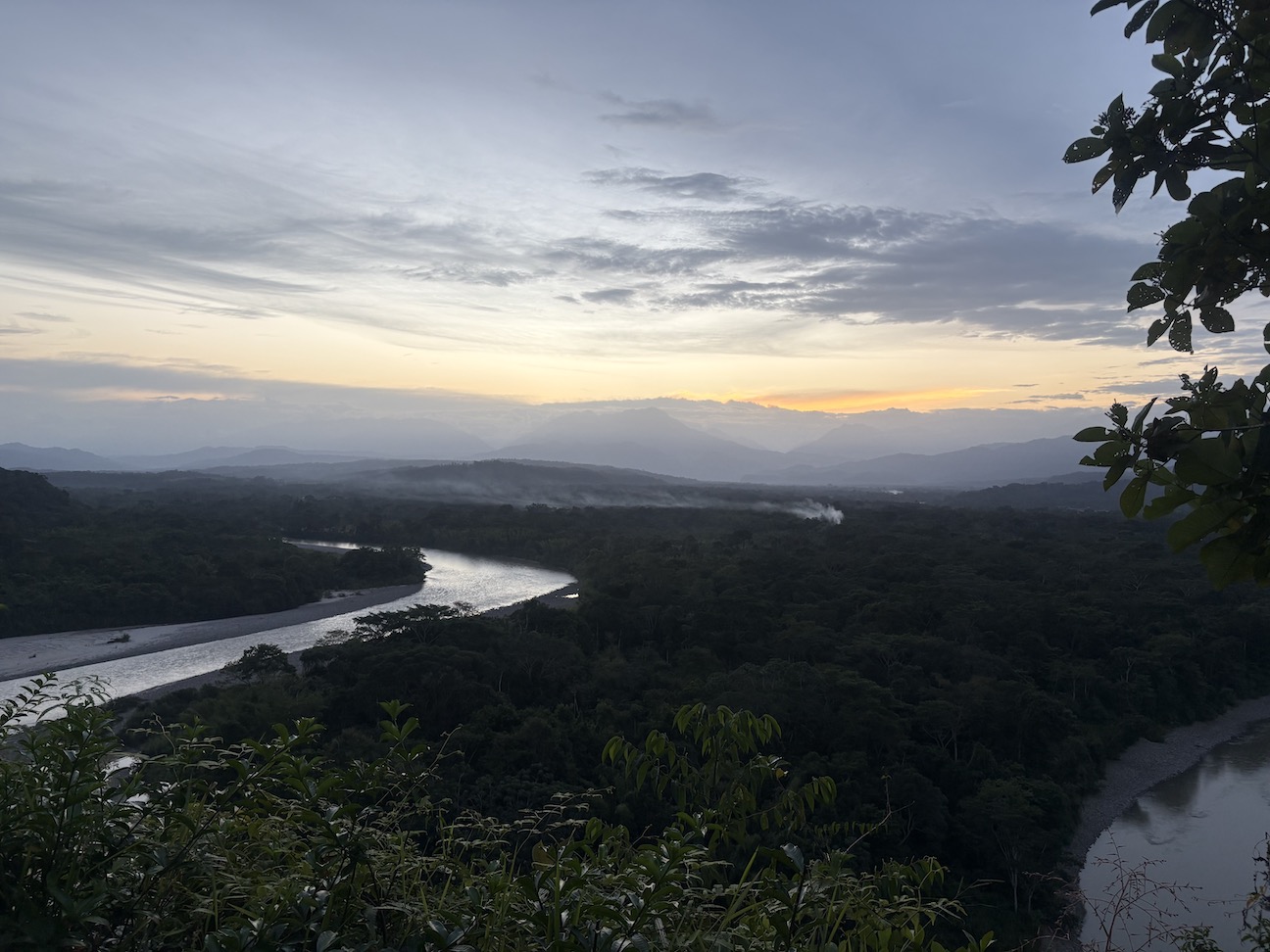
We spent the first half of the week in the newly created Arlequin Reserve in the province of Pichincha, high in the cloud forest at nearly 2,000 meters in elevation. Midway through the trip, we drove six hours south-east to the newly formed Pitalala Reserve in Napo, descending to 400 meters and into the humid rainforest.
In both reserves, our purpose was to document as many species as possible. The bio-blitz is more than academic. The data gathered from six scientists on the trip - insects, spiders, reptiles, birds, flora - becomes scientific evidence that strengthens the case for protection and supports proposed expansions of these reserves. Conservation depends on proof obtained in the field.
One of the highlights during the second half of our journey was identifying a rare tree species - dracontrum spruceanum - a reminder of how much remains undocumented. We visited a proposed expansion area where a large lodge, currently in need of renovation, is planned to become a scientific study center.
Not every day is dramatic. There are hours of heavy rain, long stretches of waiting in the forest, study sessions at the guest lodge — compiling reports, researching species, taking photographs, planning the next outing. Fieldwork is disciplined, meticulous, and often uncomfortable, including plenty of bugs and all hands-on to push the car out when it gets stuck in the mud. It requires resilience and deep commitment which has gained my respect as I observe the work.
As our week was ending, we received disappointing news: on February 26, 2026, Ecuador’s National Assembly approved reforms proposed by President Daniel Noboa aimed at expanding the nation’s mining sector. Mining operations, with their heavy machinery and chemical processes, pose serious risks to fragile ecosystems like the ones we had just spent days documenting.
The news was sobering and it reinforced why this work matters. Scientific documentation, protected reserves, community partnerships are essential safeguards at a time when pressure on natural landscapes is increasing.
I return home with dirty boots, clarity, and respect for on-the-ground projects supporting conservation. I leave with hope because the work continues, and it matters now more than ever.
