
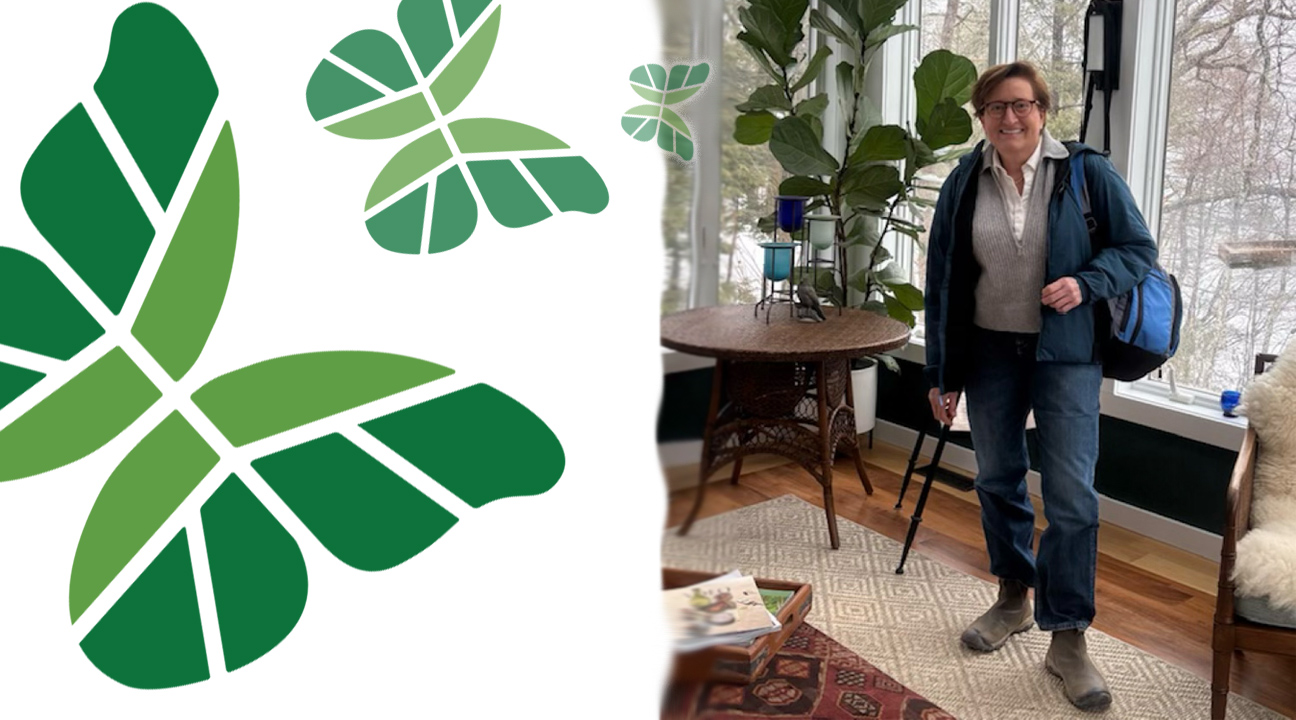
Rainforest Partnership’s new CO-CEO joins Scientists in Ecuador to gather biodiversity data that supports lasting forest protection.
Foreword by Niyanta Spelman: Introducing Tatiana Kaletsch.
As founding CEO, I am taking this opportunity to introduce Tatiana Kaletsch, now CO-CEO with me. We will share much more over the coming months. For now, I want to simply announce Tatiana’s new role and this wonderful blog from her.
Ecuador’s Rainforest and Cloudforest are among the most biodiverse places on Earth—and for the next 10 days, it will also be a place of learning for me. As the new CO-CEO of Rainforest Partnership, I am heading into the field to work alongside scientists who are documenting rare and endangered species whose presence can help strengthen the case for protecting this extraordinary landscape.
Stepping into the forest with humility
This expedition was planned months ago, long before I stepped into this leadership role. Now, it feels especially meaningful. I will be working alongside a herpetologist affiliated with the Explorers Club who is documenting amphibians and reptiles in Ecuador's Rainforest and Cloudforest. Some of these species are rare. Some may be endangered. Each one matters.
My role is not to lead the science—but to learn from it.
Conservation often happens in meeting rooms, through strategy and policy. In the forest, it is slower and more deliberate. It means walking carefully through fragile ecosystems. It means documenting temperature, elevation, and habitat conditions with precision. It means listening—to the forest, to scientists, and to local communities who know this land best.
Why documenting life strengthens protection
When we talk about biodiversity, it can feel abstract. In Ecuador, it is immediate and alive. Amphibians call at dusk. Butterflies move through filtered light. Moss-covered trees hold entire micro-ecosystems.
Scientific documentation transforms appreciation into evidence. Identifying rare or threatened species provides transparent, credible data that can support formal land protection. It gives governments, partners, and communities tangible reasons to safeguard forests rather than clear them.
Conservation that centers people
Rainforest Partnership currently supports three active projects on the ground in Ecuador—the butterfly initiative, youth leadership program, and women’s economic empowerment project. Each reflects a simple belief: conservation succeeds when communities are part of the solution.
Protecting forests is not just about preserving species. It is about respecting the people who depend on these ecosystems and supporting opportunities that make protection sustainable. Our work is rooted in partnership, transparency, and shared benefit.
As I leave today and prepare to return on March 1, I feel both excitement and responsibility. I am stepping into this experience as a learner, committed to understanding how field research informs protection—and how protection must always include community voices.
The Rainforest’s future is not guaranteed. But hope lives in the data we gather.
Hope lives in collaboration.
Hope lives in the decision to protect what we still have.
I look forward to sharing what I learn from the forest floor—and how it shapes the work ahead for Rainforest Partnership.
