
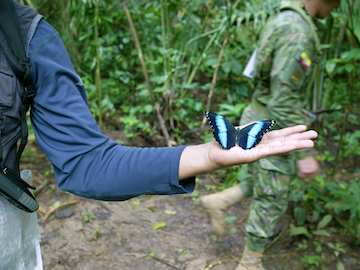
Part I: How can butterflies help protect the Amazon?
Discover how butterflies are helping scientists track climate change in the Amazon. Through a groundbreaking collaboration with park rangers and researchers, this project uses butterfly monitoring to protect one of Earth’s most biodiverse regions.
For the past few years, Rainforest Partnership has worked closely with researchers at the Pontifical Catholic University of Ecuador (PUCE), University of Florida, University of Cambridge, and the National Institute of Biodiversity in Ecuador to answer this question. This project was born from a collaboration among national and international partners, including academia, NGOS, and public entities like National Parks and government offices.
“We have signed an agreement with the Ministry of Environment in Ecuador to collaborate and monitor butterfly populations together. Our job as researchers has been to provide capacity building workshops to park rangers and continuous technical support, so park rangers are able to autonomously monitor butterflies in the field. This collaboration will enable us to explore one of the most butterfly diverse spots on earth, and also to have long term data of butterfly populations (so urgently needed) and understand impacts of climate change. As butterflies are bioindicators, this data in turn will help us understand impacts on a wider array of species.” –
María F. Checa, professor at PUCE and lead researcher.
We published a scientific paper together with the park rangers, analyzing their performance in butterfly monitoring. We found they are capable of correctly identifying close to 90% of butterfly species. This is an astonishing accomplishment since Yasuni is among the most butterfly- diverse hotspots on earth.
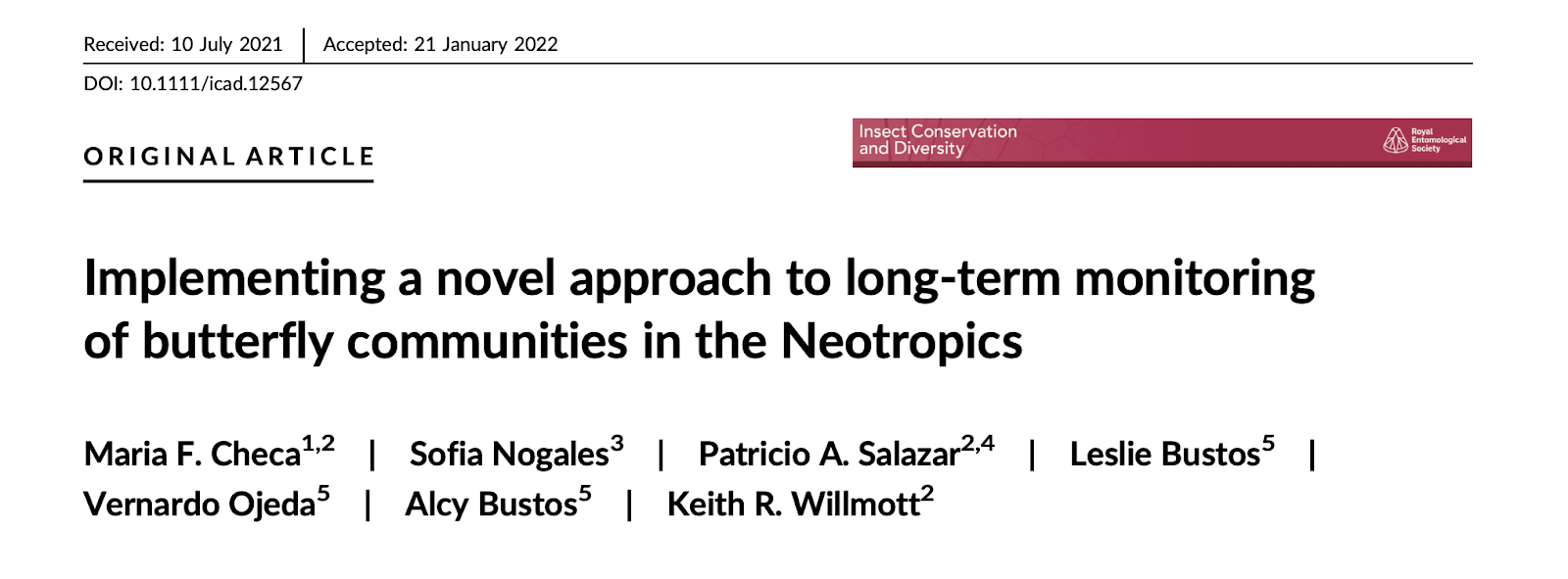
Photo: Scientific paper analyzing the performance of park rangers as parabiologists monitoring butterflies
from Yasuni.
The rangers who were involved in the project from the beginning were coauthors. They mentioned how it was the first time that researchers recognized their contribution as coauthors in a manuscript.
Program Data and Accomplishments
We have recorded over 400 species in total, monitoring how their populations changed over time, especially during the last year when Amazonia faced an unprecedented drought. We have a good data set now comprising 7 years of continuous monitoring in Yasuni. With this much data, we are ready for a big publication.
Our team wants to study how butterfly populations have changed over the last two decades and how it is related to climate. We know some butterfly groups have significantly declined, but the specific question is which butterfly species are more vulnerable to extinction due to climate change, and what traits contribute more to this vulnerability? Butterflies are bioindicators, so our findings can help us understand climate change effects on a wider spectrum of animal species.
We will study different morphological traits, including some wing and body variables, which represent different butterfly behaviors and needs. Some of these variables are measured from photos. At least 10 photos of each species (200 in total) are needed, so we needed to take around 2000 photos between December 2024 and March 2025.
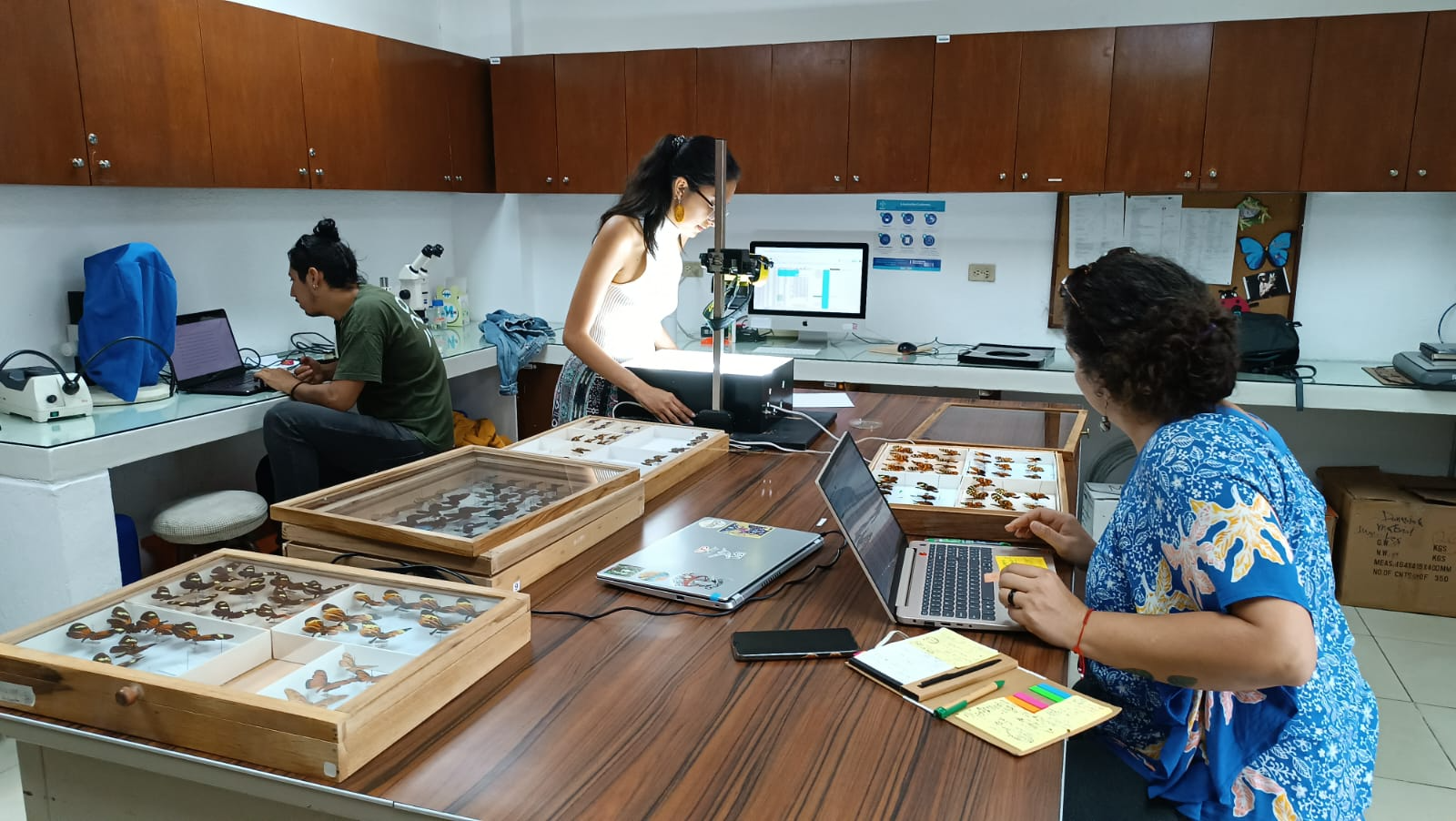
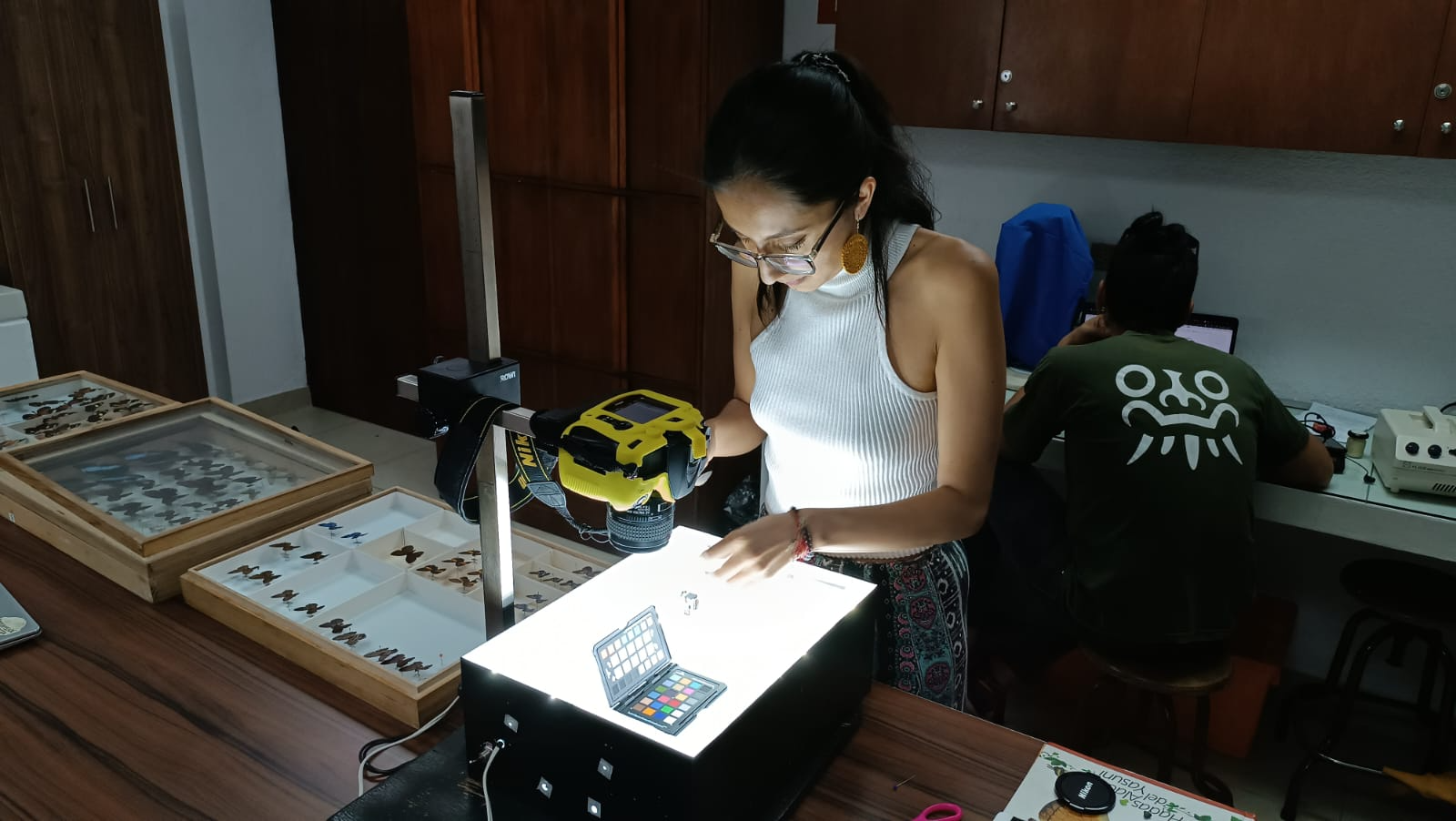
Photos: Project collaborators taking photos of butterfly species from Yasuni at Catholic University in
Quito.
Additional bibliographical research is needed for these future publications. Different traits can make a butterfly species more vulnerable to extinction, such as diet specialization. For example, caterpillars who eat 1-2 species of host plants are more vulnerable than those that eat a wide variety of species. Geographic distribution is also a key factor: species that are found worldwide are at less risk than endemic species, for instance.
We currently do not have this information for butterfly species from Yasuni. We need to conduct bibliographical research to compile and analyze data on this area’s incredible diversity of butterflies. This will require time and resources as hundreds of academic publications need to be reviewed. This task is an exciting opportunity to involve undergraduate students and young researchers.
Support our research! Help fund the next phase of butterfly monitoring so we can continue tracking climate change’s impact on the Amazon.
